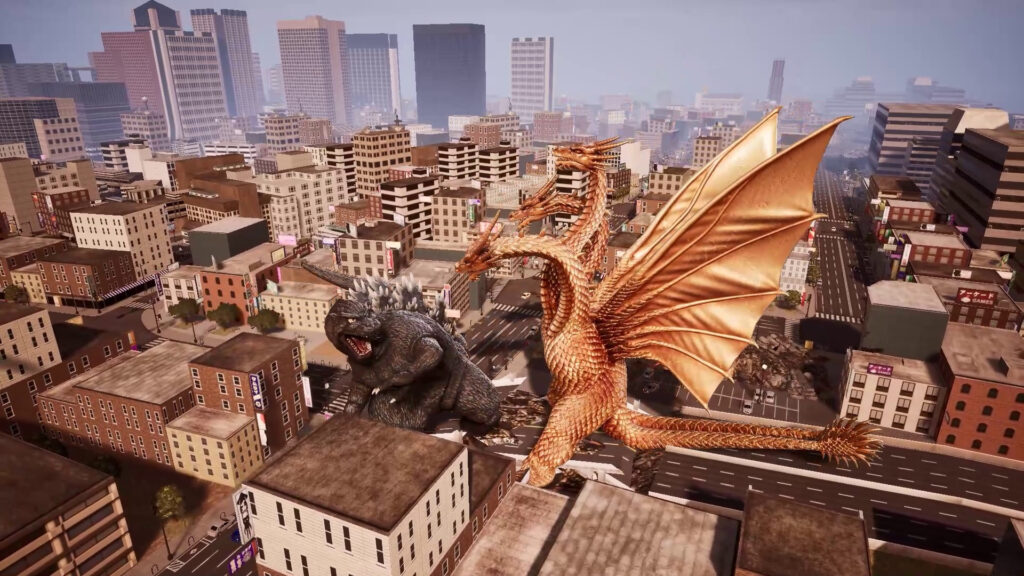
Choosing between 12 playable monsters in Godzilla: Destroy All Monsters Melee Remastered is easier when you start with a playstyle instead of picking the most familiar face. The updated version of the 2002 arena fighter launches November 3, 2026, adding improved visuals, online battles, and a revised unlock system. This guide brings together the official character descriptions from PlayStation and the feature list from Atari, then offers clearly labeled editorial advice. It is not a hands-on review or a tested competitive tier list.
Godzilla Remastered: quick facts
| Detail | Confirmed information |
|---|---|
| Release | November 3, 2026 |
| Platforms | PlayStation 5, Xbox Series X|S, Nintendo Switch 2, PC via Steam |
| Roster | 12 playable kaiju |
| Arenas | Eight locations with day and night variations |
| Multiplayer | Local battles plus new online multiplayer |
| Reference price | $29.99 on Atari’s US storefront; regional prices can vary |
Which monster should you choose first?
For a first match, our practical recommendation is Heisei Godzilla: he offers a dependable combination of health and straightforward melee attacks. Godzilla 2000 is a suitable alternative for players willing to trade some raw power for speed. Players who prefer spacing should consider King Ghidorah or Mechagodzilla, while Gigan and Rodan appeal to aggressive, mobile fighters. If throwing and grabbing are your priority, Orga deserves an early look.
Every fighter compared at a glance
The suggestions below are editorial playstyle classifications derived from official descriptions, not frame-data measurements or a claim that we have ranked each monster in competitive play.
| Kaiju | Preferred approach | Key strength | Main limitation |
|---|---|---|---|
| Heisei Godzilla | Balanced beginner | Durability and reliable close combat | Slowly charged energy moves |
| Godzilla 2000 | Faster all-rounder | Mobility | Less power and durability |
| King Ghidorah | Long-range spacing | Projectiles and flight | Restricted close combat |
| Anguirus | Defensive counterfighter | Damaging block and grapples | Little ranged pressure |
| Megalon | Hit-and-run ambush | Burrowing and surprise grabs | Below-average defense |
| Gigan | Fast rushdown | Teleporting and sharp strikes | Energy-attack vulnerability |
| Destoroyah | Heavy middle-range attacker | High-impact attacks | Speed and energy consumption |
| Rodan | Air mobility | Roster-leading speed | Extremely weak defense |
| Mecha-King Ghidorah | Weaponized grappling | Shield and varied projectiles | Slow, energy-dependent |
| Mechagodzilla | Armored ranged specialist | Weapons and protection | Poor options without energy |
| Orga | Close-range grappling | Long reach and throws | Fast, evasive rivals |
| Kiryu | Balanced weapons fighter | Flexible arsenal | Energy management |
All 12 kaiju explained
1. Heisei Godzilla: the training-ground favorite
Godzilla starts with generous health and a wide enough range of punches, claws and tail attacks to teach the core rhythm of a match. His energy pulse can be threatening, but charging it creates openings for an alert rival. Learn your basic close-range sequences first, then reserve slow, high-commitment attacks for moments when the opponent cannot immediately punish them.
2. Godzilla 2000: familiar moves, more movement
Godzilla 2000 retains the all-rounder identity while leaning toward speed at the expense of some strength. That makes him a reasonable second character once you know the fundamentals. Use his additional movement to reset distance after exchanges rather than assuming he can outlast a heavier monster blow for blow.
3. King Ghidorah: command the space between fighters
Ghidorah is built around projectiles and controlling the approach. His ability to attack during flight can alter the angle of engagement, but flying costs energy. Avoid letting aggressive fighters pin you down: the creature’s anatomy limits its close-range tools compared with specialized melee combatants. Spacing matters more than reckless projectile repetition.
4. Anguirus: turn defense into a threat
Anguirus rewards players who watch an opponent’s attack timing. His armored spikes make careless pressure dangerous, and his grappling options help once he gets close. The drawback is a lack of conventional long-range offense. Rather than chase a zoner blindly, try to approach between attacks and make each successful defensive read count.
5. Megalon: surprise attacks from below
Burrowing creates an unusual route to evade pressure and reappear with a grab. Because the maneuver consumes energy and Megalon is less durable than heavier fighters, it should not become a panic button pressed on every exchange. Think in short cycles: reposition, appear at an awkward angle, attack, and leave before the counterattack.
6. Gigan: speed and relentless pressure
Gigan’s mobility, teleportation and sharp melee attacks suit players who want to stay active. Mix up how you enter striking distance so a rival cannot simply anticipate your next approach. Official descriptions also identify a vulnerability to energy attacks, making passive projectile trades a questionable plan against strong ranged fighters.
7. Destoroyah: major damage, major commitments
Destoroyah brings powerful physical hits and threatening energy options at middle distance. However, the combination of slow movement and expensive special attacks makes missed opportunities costly. Try to identify a real opening before spending a large amount of energy; an opponent with good mobility can punish an overly predictable attempt.
8. Rodan: mobility at the cost of safety
Rodan is presented as the fastest kaiju and a notably mobile aerial fighter, but he also has the weakest defense in the lineup. That trade-off should shape your entire approach. Attack from changing positions, avoid extended stand-up exchanges, and treat every successful disengagement as part of your damage prevention strategy.
9. Mecha-King Ghidorah: technical tools and controlled grapples
Mecha-King Ghidorah trades some raw strength for a more elaborate tool set, including a shield, varied projectiles and flexible throws. Many of those abilities depend on an energy reserve. He remains slow, so judging when a simple attack is enough—and when an expensive special is justified—is more useful than constantly using every available gadget.
10. Mechagodzilla: heavily armed but resource dependent
Missiles, beams and defensive strength make Mechagodzilla appealing to fans of long-range pressure. The catch is what happens when energy runs low: his melee and grabbing alternatives are less convincing. Keep an escape route in mind, preserve resources for crucial situations, and avoid assuming your armor will compensate for being stuck at close range.
11. Orga: grabs that redefine the danger zone
Orga’s long arms extend the range at which an opponent must respect a grapple. This makes him particularly interesting against fighters who habitually stand just outside normal melee distance. His weaknesses include sluggish movement and expensive special abilities, meaning evasive or highly mobile opponents can force him to commit at the wrong moment.
12. Kiryu: a versatile mechanical choice
Kiryu offers a more balanced profile than the heavily specialized Mechagodzilla, combining weapon options with a relatively approachable tool set. The Absolute Zero Cannon is a recognizable highlight, but it still demands energy discipline. Players accustomed to standard Godzilla may find Kiryu an accessible way to try a more weapon-oriented fighting style.

Our picks for five different player types
Learning fundamentals: Heisei Godzilla. Keeping enemies away: King Ghidorah or Mechagodzilla. Moving quickly and taking risks: Rodan or Gigan. Defending and punishing mistakes: Anguirus. Landing big grapples: Orga. These are starting recommendations, not guarantees of a match advantage. Character familiarity and how well you manage energy matter as much as the archetype.
Three transferable lessons for every match
First, keep one main character long enough to understand the timing of ordinary strikes, guarding and throws. Switching after every loss makes mistakes harder to diagnose. Second, treat the energy meter as a shared resource for moves that can also affect your mobility or defense; do not empty it just because a special attack is available. Third, pay attention to the environment. Atari says arena objects and buildings are more than visual effects: fighters can use parts of the surroundings as offensive tools.
What does Remastered actually change?
Atari describes a substantial visual overhaul, quality-of-life changes, updated gameplay, more flexible unlocking of characters and arenas, and the addition of online multiplayer alongside local options. It also lists eight battle locations with day/night variations. None of these announcements establishes online latency, frame-rate consistency or cross-platform matchmaking quality: those claims would need direct testing and should not be inferred from a feature list.
Important platform correction: is it on the original Nintendo Switch?
An early June 6 press release included the first Nintendo Switch in its platform list. However, in an October 30, 2026 interview, Atari clarified that the current release is for Nintendo Switch 2, not the original Switch. Atari said a Switch 1 release may be possible later, but that is not an announced launch. Check your device and the current storefront listing rather than relying on older release articles. Source: Atari and Pipeworks interview.
Godzilla Remastered’s demo: what did it include and is it still available?
Atari released a time-limited demo on October 15 through the official Steam demo page. The publisher announced availability until October 27, 2026; that window has passed, and the presence of an old store listing does not confirm that downloads are still available. Its announcement names Godzilla, Gigan and King Ghidorah, a useful trio for comparing balanced play, aggressive speed and ranged spacing. The demo announcement also mentions local battles for up to four players and online 1-on-1 matches. Check Steam to see whether Atari reopens downloads later. The original demo did not include the full roster or every game mode.
Frequently asked questions
Are all 12 monsters unlocked immediately?
Atari highlights an improved unlock system, not a confirmed promise that every kaiju is selectable at first launch. Check the in-game roster for specific conditions.
Who is the strongest monster?
No official, comprehensive competitive ranking establishes one universal winner. Strength depends on opponent choices, energy management and how you use the arena.
Can I play with friends?
Yes. The publisher lists local multiplayer and new online battles. We have not measured network stability or verified cross-platform matchmaking.
Is this a hands-on review?
No. This is a researched character-selection guide as of November 3, 2026. Hands-on performance conclusions would require separate testing.
Looking for more PS5 games? Browse the Ponch Gaming PlayStation section for other releases and guides.